Non-Obvious Thoughts on How to Promote Your Ideas

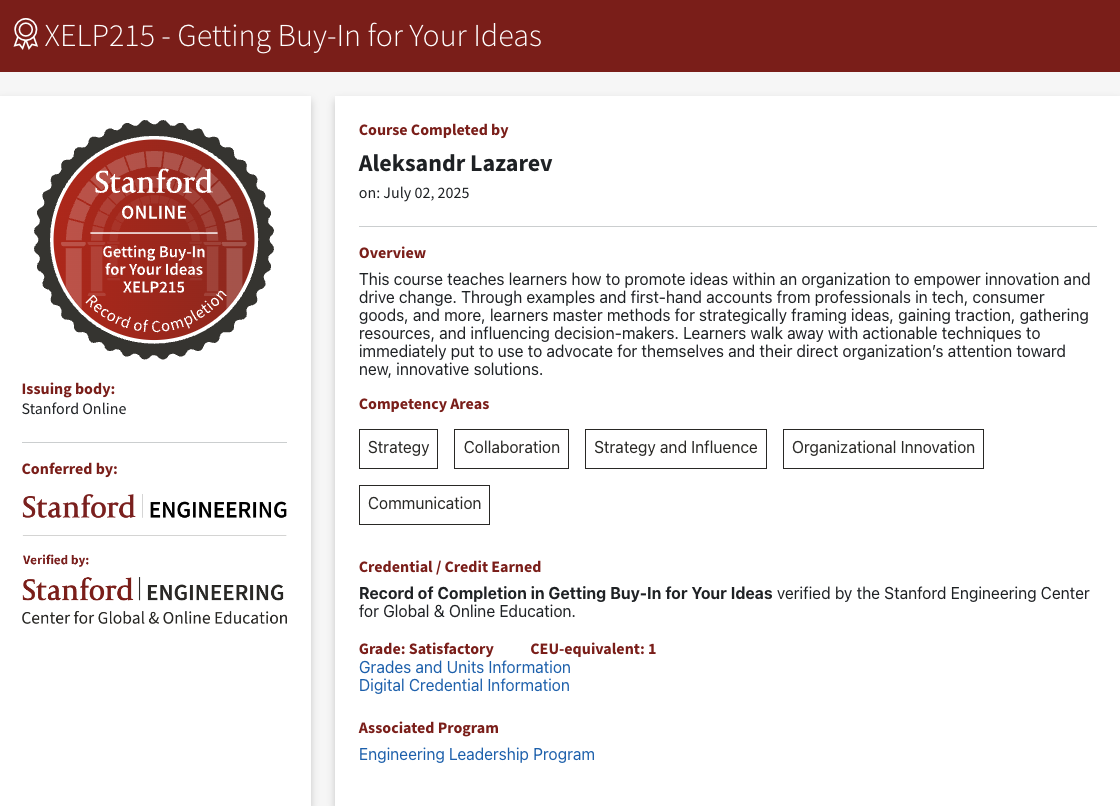
Over the course of my (already fairly long) career, I’ve taken quite a few courses on product and project management. I started with the classics—Yandex, GoPractice—but at some point, I felt this irrational urge to shoot for Stanford.
I say irrational because:
- The courses weren’t in my native language.
- The titles were almost identical to the ones I’d already done locally.
- And, of course, the price tag was steep.
But I really wanted that shiny “achievement badge” so I could one day drop the line, “Well, I actually studied at Stanford” in some high-stakes negotiation (so far, I haven’t needed that card).
Anyway, this piece isn’t about product management insights I picked up there—after 8 years in product and plenty of training before, there wasn’t much truly new. Instead, I want to talk about a course I recently finished, one I never would have noticed if it weren’t for things happening at work. The course? “Getting Buy-In for Your Ideas.”
A Bit of Backstory
Almost all my prior experience was with early-stage startups. Small teams, crazy speed, and a workflow where an idea could go from thought to shipped feature in just a few hours.
After seven years of that life, I ended up in Big Tech. A giant, monstrous corporation that does just about everything (name withheld, but you know the type).
And, being new to big tech, I naively thought I could “fix things.” That I could make processes smoother, cleaner, more efficient. Silly me.
My “revolutionary” proposals were buried right at the discussion stage, with the classic line: “Yeah, that’s interesting, but it’s already kind of working—don’t break it.”
After that crash landing, I started wondering: how do you actually push ideas through inside a huge company? That’s when I stumbled on Stanford’s mini-course about how ideas survive in the corporate jungle.
Here’s my distilled version—saving you a few dozen hours and quite a lot of money.
🙄 Why Ideas Matter
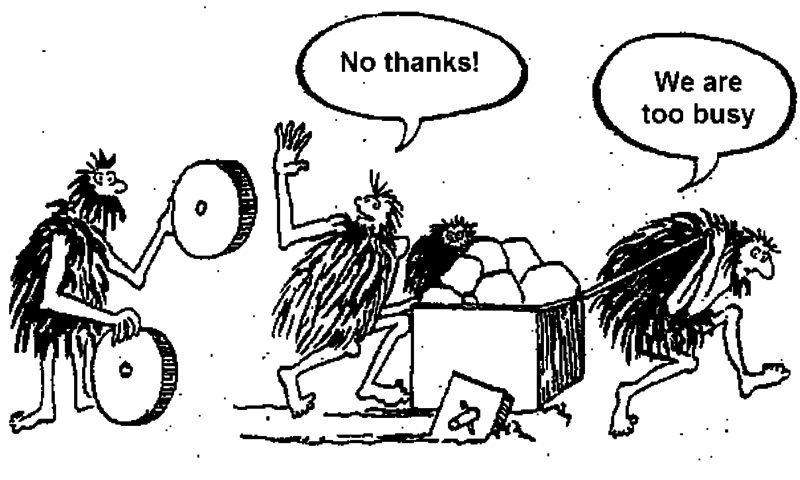
Stanford starts bluntly: without new ideas, every company turns into a dinosaur museum. The world changes at breakneck speed, and tech gets outdated faster than your iPhone battery drains in winter.
But decisions aren’t made by gods—they’re made by busy humans with limited attention. You’ve got five minutes for your pitch. What you get across in those five minutes is your reality.
So your idea has to be packaged to land instantly.
🚧 Problem or Solution?
The instinct is to propose a fix: “Let’s build a new messenger.”
But here’s the kicker: it’s easier to sell the problem than the solution.
- Everyone agrees on the pain: “Our online meetings are terrible.”
- Solutions, however, spark endless debates: “New software!” vs. “It’s just our intranet!” vs. “Let’s go back to offline meetings!”
Researchers even coined a term for this: solution aversion—people reject the problem simply because they dislike the proposed fix.
👉 Bottom line: sell the bug report, not the release. Align on the pain first, then search for the patch together.
👀 Big Idea vs. Small Idea

This was my biggest mistake at the new job: trying to push big transformations. End result? Lost trust, lost energy, gained frustration.
Stanford’s take: small ideas win over big ones.
Case in point: one student wanted to host a global conference featuring Oprah. Huge idea. Management killed it instantly. Later, she repackaged the concept into a mini-podcast with colleagues. Guess what? Success. Recognition. (No Oprah, but still.)
Why small ideas rule:
- Easier to get the first “yes” (and people love consistency—once they say yes to something small, bigger yeses follow).
- Cheap and fast to test.
- Failure costs almost nothing.
- Over time, you grow from “the one with small, doable ideas” into “the one who gets things done.”
😱 Why? Threat or Opportunity
When explaining why your idea matters, you can go two ways:
- Threat: “If we don’t do this, the competitor will eat us alive.”
- Opportunity: “If we do this, we’ll open a new market.”
Both work. Just don’t mix them. Saying “Everything’s doomed but also everything will be amazing” confuses people.
🫱🏼🫲🏽 Who Are You Talking To?
A key realization: your idea doesn’t exist until the right people hear it.
- Figure out who really makes the decision (spoiler: it’s often not who you think).
- Adapt your language: to the CTO, talk scale; to Sales, revenue; to HR, people.
- Find allies. The best combo? A seasoned mentor + a motivated peer.
🍝 How to Serve It
An idea ≠ success. Delivery matters.
- Start with a hook—a short, sharp statement of the pain.
- Cut the “jargon monoxide” (Stanford’s brilliant term for corporate nonsense). Use acronyms and buzzwords only if your listener does first.
- Stories and metaphors beat ten slides of charts.
- Always offer a first step: show what can be done tomorrow.
☝🏽 After the Pitch
Three scenarios:
❌ Rejection. Not a failure, just resource savings. At Google, 90%+ of ideas die at step one. Do a post-mortem, learn, and build connections.

⏸ “Yes, but not now.” Capture the feedback, wait for the right moment, and follow up later.
✅ “Go ahead!” Congrats—but brace yourself: now comes the flood of feedback and conflicting inputs.
🤯 Key Takeaways
The essence of the course boils down to: ideas don’t win by default. What wins is smart delivery and the ability to move in steps, not leaps.
- Sell the problem.
- Start small.
- Choose one path—threat or opportunity.
- Speak their language.
- Rejections are practice, not defeat.
😎 How It Changed Me
I’d love to say that after this course all my ideas took off and I “fixed everything.” Nope. Not even close.
But now I follow this playbook: small, consistent steps toward the bigger goal. Whether it works—I’ll let you know in a couple of years.
And if you’ve got success stories about driving change in Big Tech, I’d love to hear them.